


Performance in horsepower, maximum rpm, top speed – which key car performance metric is missing from this list? Exactly, acceleration. From 0 to 100 kilometres per hour. A stat that even children learn by heart when playing Top Trumps. From 0 to 100 km/h in 3.9 seconds? Trick!
A BRIEF HISTORY OF ACCELERATION.

A BRIEF HISTORY OF ACCELERATION.
For a long time, the history of automotive acceleration didn’t really get off the ground. The reason? Many cars simply didn’t have the power required to reach a speed of 100 km/h in the first place. The first vehicle to break this barrier was the French car ‘La Jamais Contente’ (‘The Never Satisfied’) in 1899. This ‘rocket’ on four wheels was powered by two electric motors, each with an output of 34 hp. The exact time for this first sprint from 0 to 100 km/h has not been recorded. One thing is certain: before the driver, Camille Jenatzy, reached the target speed, he had already covered a good kilometre on the test track. Incidentally, at that time, electric mobility was still on par with internal combustion engine technology. It was only the invention of the electric starter and the expansion of the petrol station infrastructure that caused the electric motor to fall behind.
FROM 0 TO 100: SLOW AT FIRST, BUT THEN REALLY FAST.


FROM 0 TO 100: SLOW AT FIRST, BUT THEN REALLY FAST.
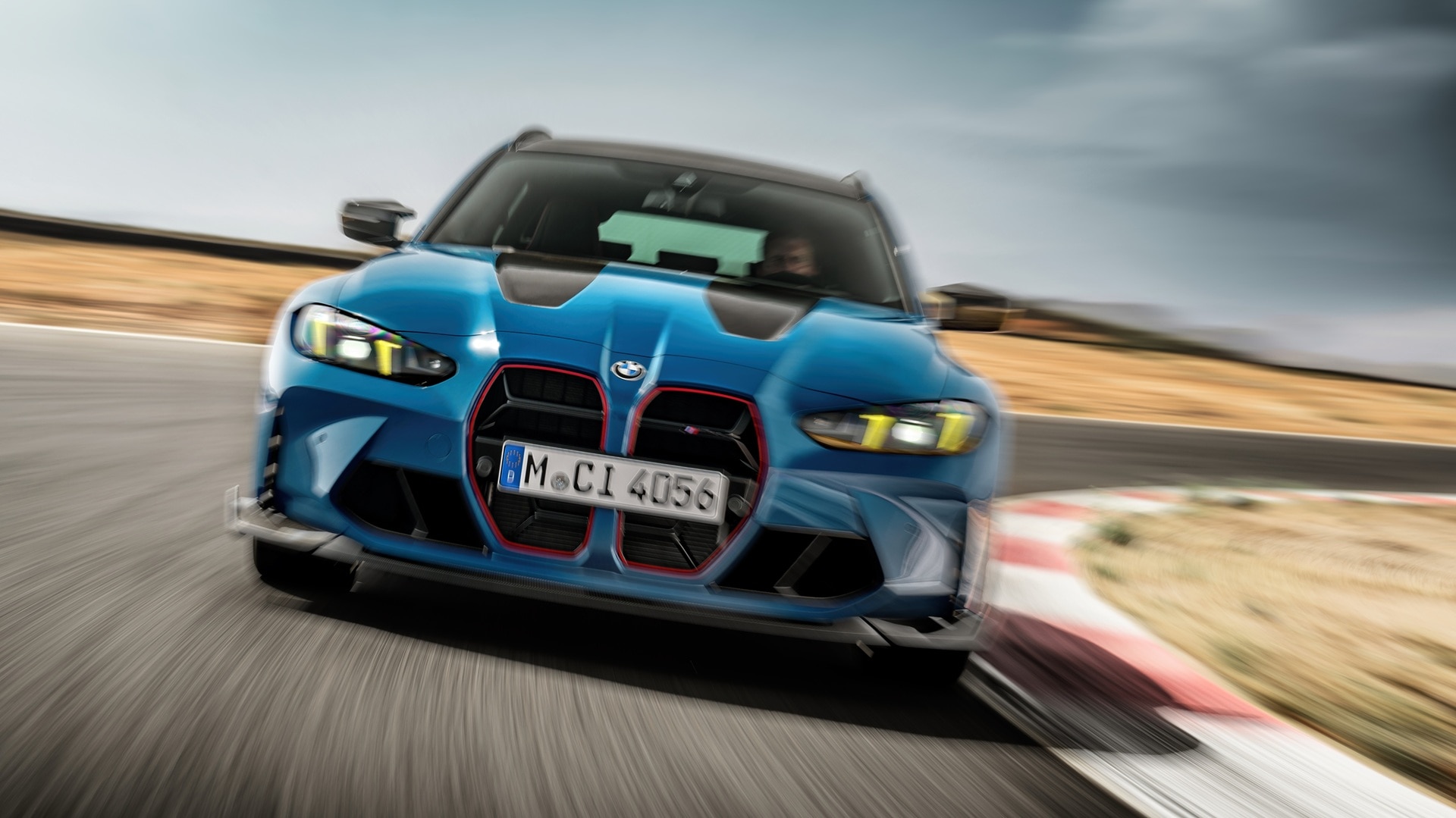
Half a century later, car acceleration figures were already significantly better, but still far from being called fast. In the 1950s, a small car took more than 30 seconds for the standard sprint. Even sports cars struggled to break the 10-second barrier. Then things started moving faster in car acceleration. When BMW launched the first BMW M3 with 147 kW (200 hp) 40 years ago, the sports car accelerated to 100 km/h in a respectable 6.7 seconds. The 405 kW (550 hp) BMW M3 CS Touring from 2025 almost halves this figure to 3.5 seconds.
Lack of power is no longer an excuse these days – but what else does a car need to sprint to 100 km/h as quickly as possible?
OPTIMAL ACCELERATION THANKS TO HIGH-TECH.


OPTIMAL ACCELERATION THANKS TO HIGH-TECH.
From theory to practice, from calculating acceleration to concrete facts: the driver’s skills continue to play a key role, particularly in cars with manual transmission. After all, the driver must know the optimal clutch engagement speed when pulling away and hit the switchover points between gears perfectly to build up speed as quickly as possible. In cars with automatic or dual-clutch transmission, high-tech software assists the driver. Where available, Launch Control does most of the work: it controls the technical components so that, when setting off with the accelerator pedal all the way down, the optimum rpm is achieved, and the tyres grip the asphalt with full traction. In other words: the computer calculates the conditions for the fastest sprint, then the vehicle accelerates with exactly the right mix of grip and tyre slippage.
With advances in technology, automatic controls have overtaken the manual transmission. Whilst professional drivers used to be able to accelerate cars with manual gearboxes to 100 km/h significantly faster than automatic models, they have now fallen behind automatics equipped with Launch Control. Which is not to say that you can’t have a lot of fun changing gears manually.
THE 10 BMW M SERIES MODELS WITH THE FASTEST ACCELERATION.
PLACE | M MODEL | 0–100 km/h | MAX. OUTPUT |
|---|---|---|---|
1 | 3.0 s | 467 kW (635 hp) | |
2 | 3.2 s | 460 kW (625 hp) | |
3 | 3.2 s | 460 kW (625 hp) | |
4 | 3.3 s | 460 kW (625 hp) | |
5 | 3.3 s | 460 kW (625 hp) | |
6 | 3.4 s | 467 kW (635 hp) | |
7 | 3.4 s | 405 kW (550 hp) | |
8 | 3.4 s | 405 kW (550 hp) | |
9 | 3.5 s | 405 kW (550 hp) | |
10 | 3.5 s | 535 kW (727 hp) |

As with all records, a question arises when measuring acceleration: what are the limits for the fastest 0–100 km/h sprint? Road-legal supercars currently clock times of under 3 seconds. Rallycross cars, which benefit from almost limitless traction, even break the 2-second mark with their extremely short-ratio transmissions. And the increasing electrification of cars means we can look forward to new records being broken.
This is because, in electric vehicles, maximum torque is available the moment you press the accelerator pedal, with absolutely no delay. Unlike a combustion engine, which needs time to rev up and build speed. Furthermore, electric cars typically do not have a multi-speed transmission, which eliminates the need for gear shifts. This allows for shaving off a tenth or two. If other factors like power, traction, etc. play along, the 2-second barrier could soon be broken by particularly powerful and customised electric sports cars—with the emphasis on “particularly powerful” and “customised.” For production vehicles in everyday use, the realistic mark will be around 2.2 to 2.4 seconds for the 0-100 km/h sprint, due to the physical limits of traction. For now.
RULES FOR RECORDS.

RULES FOR RECORDS.
Naturally, potential records need to be documented: this is why measurements by the automotive media are carried out using calibrated and GPS-controlled equipment. Ideally, measurements are repeated several times on a flat, straight stretch of road in both directions – to minimise external factors such as wind. Whilst most countries focus on the magic 100, in the US and the UK it is standard practice to measure from 0 to 60 miles per hour (mph). A speed of 60 miles corresponds to approximately 97 kilometres per hour – which is why the measured results often come out a tad lower. One thing is certain: whether from 0 to 97 or 100 km/h, with a time of around three seconds, you’re on the safe side when playing Top Trumps. At least for now.
STANDING START vs. 1-FOOT-ROLLOUT.

STANDING START vs. 1-FOOT-ROLLOUT.
In the conventional method, acceleration from 0 to 100 km/h is measured from a standstill – or, in other words, from a standing start. In addition, BMW M records the figure using the 1-foot rollout method to provide a more comprehensive assessment of performance. With this alternative measurement method, which is used worldwide, the stopwatch only starts once the vehicle has covered a distance of one foot (30.48 cm).
1. DSC.

1. DSC.
BMW M4 F82
Before setting off, deactivate the BMW Dynamic Stability Control (“DSC off”). Otherwise the computer will reduce the engine power at the slightest sign of wheel slip, meaning you’ll get off to a slower start.
BMW M4 G82
Before setting off, activate the BMW Dynamic Stability Control and choose the DSC mode MDM.
2. STARTING RPM.

2. STARTING RPM.
BMW M4 F82.
Rev up the BMW M4 Coupé whilst stationary. This means getting the engine to its optimum starting rpm with the clutch down. This depends on the grip between the road surface and the tyres. The higher the friction, the higher the starting rpm can be set. For the BMW M4 Coupé with a manual transmission, this is in the range of 3,200 to 4,000 rpm.
BMW M4 G82.
The optimum starting rpm no longer needs to be adjusted manually by the driver; during kickdown, it is automatically set by the control unit.
3. SLIPPAGE.

3. SLIPPAGE.
BMW M4 F82.
The next step is to determine the tyre’s maximum traction point. A slippage of between five and 15 per cent is ideal. You’ll notice immediately if there’s too much slippage, as the tyres will spin. The same applies if there’s too little: in that case, your BMW M4 Coupé will get off to a rather slow start. Remember: as the driver, you’ll be manually performing the tasks that Launch Control would otherwise handle for you.
BMW M4 G82.
Launch Control assists the driver achieve the optimal tyre slip, which should be between five and 15 per cent as well.
4. SHIFT RPM.

4. SHIFT RPM.
BMW M4 F82.
The final point is gear changes. Shift up smoothly and, above all, at the right moment. When accelerating at full throttle, the gear changes must be perfectly timed; this is the case at around 7,100 rpm. If you shift up too early, the nominal rpm drops and you lose time because of a lack of power. And if you shift too late and rev the engine too high, you may have already passed the point of maximum power output.
BMW M4 G82.
The optimal shift point is also 7,100 rpm, with Launch Control assisting to maintain boost pressure.
PRACTISE* FOR THE PERFECT SPRINT.
When it comes to achieving the ‘best possible acceleration’, one or two attempts aren’t enough – not even for professionals. It will take a few attempts before you’ve found the right engine speed for the starting rpm, the best wheel slippage and the right shift points to ensure optimum traction. Only then will you get off to a perfect start. For the best possible acceleration figures, the car’s engine should also be warmed up, and auxiliary components such as the air conditioning and other systems that use power should be switched off. The times ultimately recorded depend largely on external conditions: the ambient air and surface temperatures, how grippy the asphalt is, and whether it is wet or dry.
FAQ
Questions and answers about acceleration from 0 to 100 km/h.
The 0-to-100 km/h time indicates how quickly a car can accelerate from a standstill to 100 km/h. The lower the figure, the more responsive and sporty the acceleration.

* Extreme acceleration manoeuvres result in significant tyre wear and place a heavy strain on the vehicle’s mechanical systems.
You should never practise any of this on public roads, but only on a closed-off and suitable site, such as a racetrack.


